Our story
How Nepal Food Networks began, and what we did when the world stopped.
The beginning
Nepal Food started in 2019 as an idea and a team effort: a national fair and summit to celebrate the diversity of Nepal's food, and to open a wide conversation about its future with the people who grow it, cook it, sell it and eat it.
The first Nepal Food Fair & Summit was planned for December 2020 in the Kathmandu Valley. In July 2020 we registered Nepal Food Networks as a not-for-profit company to hold that space.
Then COVID-19 arrived.
We postponed the fair. Many of us worked in agriculture, and we saw what the lockdowns did up close: farmers with harvests and no market, young people without work, families without enough to eat. So we turned to what was needed, and kept the larger conversation going in smaller ways.
What we did, 2019 to 2022
The idea of Nepal Food
A small team from Development Voyage in Nepal and rundumkultur in Switzerland began planning Nepal Food 2020 under the motto "growing, preparing, sharing". It was to bring together people from the whole food chain and every region of Nepal for three days in the Kathmandu Valley:
- a fair for the public, with a food park and a farmers' market
- a summit for people working in food, with talks and workshops
It was set for 3 to 5 December 2020.

A host team for collective impact
With Firfirey Organics, thegundruk.com and Khali Khutta, we formed Host Team Nepal in the Social Gastronomy Movement's Collective Impact Program, one of the host teams in six countries building food collaboratives across sectors.
Mapping who is doing what
To build a network, you first need to know who is in it. We mapped more than 200 people and organisations working towards sustainable food in Nepal: farmers and producers, businesses, activists, researchers, hospitality, citizen groups and more.
Best practices on film
We began filming work that already shows another food system is possible. Four films are complete:
- Sano Paila, Birgunj: community food support during a crisis
- Raithaane, Patan: keeping ethnic local cuisine alive
- Kopila Valley School, Surkhet: school nutrition and sustainability education
- Doti and Nawalparasi: community seed banks in western Nepal

Solidarity Farmer
During the second lockdown, farmers could not sell their harvest while people in the cities went hungry. Over 45 days we connected the two:
- 12 young people who had lost their jobs worked on local farms
- 1,800+ kg of produce was bought from farmers who had no other market
- the food went to 7 community kitchens in 4 cities
- together they served 3,600+ warm meals to people in need
Individuals and organisations in Switzerland and Nepal supported the campaign with almost CHF 5,000.

Five dialogues while the country was closed
We kept the conversation open online. Five independent dialogues, contributing to the UN Food Systems Summit Dialogues 2021, brought together 100+ participants, 25 experts and 5 partner organisations.
- Pandemic and food security: how to strengthen Nepal's food system
- Mainstreaming regenerative agriculture
- Connecting local farms and foods to local markets
- Ethnic cuisines and sustainable food systems
- Seeds and sovereignty
We also took part in the National Food Systems Dialogue organised by the National Planning Commission.
Universal Plate, Pokhara
As part of a Social Gastronomy Movement campaign in more than 17 countries, we cooked and shared 500 meals in Pokhara during Dashain, with Vintuna Youth Club and the Nepalese Young Entrepreneurs Forum Pokhara. Activists, low-income families, children from orphanages and self-help groups sat at one table.

Recovering the harvest after the floods
In mid-October, unseasonal rain flattened harvest-ready paddy across the Terai and took more than 150 lives. We mobilised 100 students from IAAS Nepal, local government leaders, citizen networks and volunteer farmers. Working alongside 50 affected farmers, they recovered nearly 50 hectares of crops.

A food systems dialogue in Kailali, Sudurpaschim
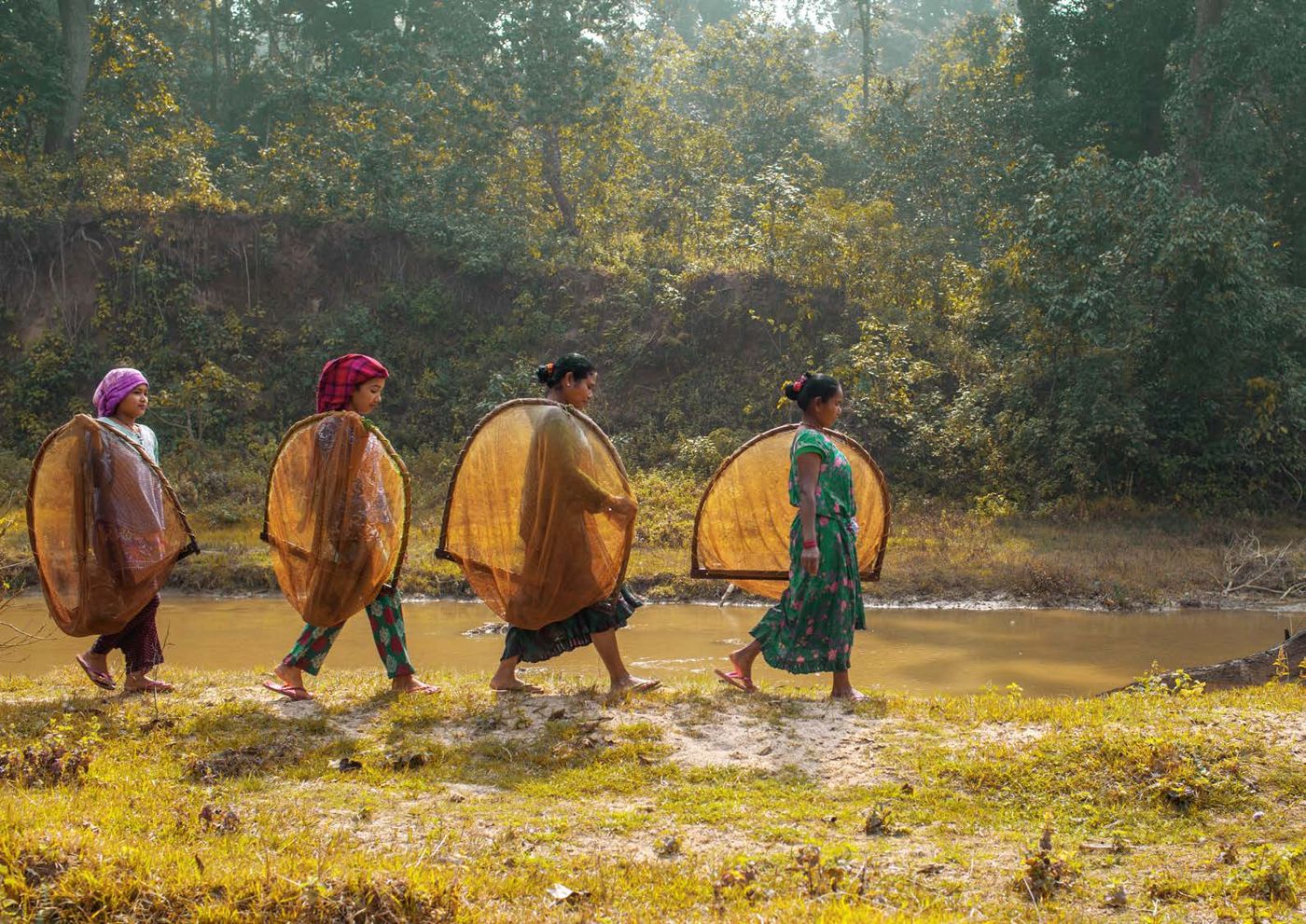
With Li-BIRD, we held a dialogue at a Tharu community homestay in Bhada, Dhangadhi. 50+ people from across the food system worked on the future of food in their province, while Tharu women and men cooked and served their own cuisine. It showed us that the best conversations about food happen around food.

A steering committee for Koshi Province
With Almost Heaven Farms and the Ministry of Agriculture of what was then Province 1, we brought 35 people together for two days at Almost Heaven Farms in Fikkal, Ilam: farmers, provincial officials and planners, NGOs, a financial institution, students, women-led groups, self-help groups and people from tourism and hospitality.
In mixed groups they drew the food system they grew up with, the one they live with now, and the one they want. On the second day they formed a steering committee to carry a provincial food dialogue forward.

Pokhara Food Dialogue on World Food Day
With the Ministry of Land Management, Agriculture and Cooperatives of Gandaki Province and Pokhara Metropolitan City, we marked World Food Day with a dialogue in Birauta, Pokhara. 50 people, from farmers and provincial officials to nutritionists, students and women-led organisations, worked in groups on three questions for Pokhara's food system: productivity, nutrition, and farming that is kind to the environment.
Participants agreed to keep the dialogue going and to act on food security in their own communities.

Preparing Nepal Food
We prepared the first Nepal Food Fair & Summit under the theme "Growing, Preparing, Sharing", with an organising team and an advisory board of food people from Nepal and abroad. Nepal Food remains our flagship idea. It will return when the network is ready to carry it.


What we learned
Small and fast works
Our most useful work cost little and came together in weeks.
Food brings people to the table
Dialogues over shared local food worked better than any conference hall.
Networks hold when chains break
In each crisis, it was the people we had met and mapped who responded.
A big event needs a strong network first
That is the order we are following now.
Thank you
None of this was done alone. We thank everyone who served on our team and advisory board, the students, volunteers, farmers and cooks who gave their time, and the partners and supporters who stood with us.
Partners, 2019–2022
Social Gastronomy MovementFood NetworksKHETIAlmost Heaven FarmsDevelopment VoyagerundumkulturTHE BAZAARLi-BIRDIAAS NepalRaithaaneSano PailaKhali KhuttaFirfirey Organicsthegundruk.comNYEF PokharaBlinkNow / Kopila Valley SchoolVintuna Youth ClubMinistry of Agriculture, Province 1 (now Koshi)Ministry of Land Management, Agriculture and Cooperatives, Gandaki ProvincePokhara Metropolitan City
Supporters, 2020–2021
Foundation TemperatioDäster Schild StiftungCuisine sans frontières and individual donors in SwitzerlandSocial Gastronomy MovementNYEF PokharaLi-BIRD
And now
This November we co-host the SGM Nepal Summit 2026 in Kathmandu and Pokhara. It is our first step back, with new people and the same idea we started with.